DevOps Engineering with Cloud Computing is an intensive, hands-on bootcamp designed to build real-world skills in cloud infrastructure, automation, and continuous delivery practices. The course covers AWS services, CI/CD pipelines, containerization, monitoring, and infrastructure as code through practical labs, deployment exercises, and a capstone project preparing learners for roles like DevOps Engineer, Cloud Engineer, and Site Reliability Engineer.
This module covers Linux server systems administration and virtual machine fundamentals, including system configuration, security management, virtualization technologies, and practical skills for deploying and managing virtual machines in a server environment.
Module Lessons:
Tools and Technologies Covered:

This module focuses on Windows Server administration and virtual machine fundamentals, covering system configuration, security administration, virtualization technologies, and hands-on skills for deploying and managing virtual machines within a Windows Server environment.
Module Lessons:
Tools and Technologies Covered:

This module provides essential insights into the Windows operating system, covering system navigation, configuration, security settings, software installation, and troubleshooting techniques to enable effective and practical use of Windows.
Module Lessons:
Tools and Technologies Covered:

In this capstone project, students integrate their knowledge of Linux and Windows operating systems to demonstrate proficiency in system administration, security management, and virtualization. The project requires implementing a comprehensive, cohesive solution that operates effectively across both platforms.
Module Lessons:
Tools and Technologies Covered:

This module focuses on AWS Solutions Architect – Associate, covering cloud architecture, infrastructure design, security, scalability, and industry best practices for building and deploying applications on the Amazon Web Services platform.
Module Lessons:
Tools and Technologies Covered:

In this capstone project, participants apply their knowledge of AWS Solution Architecture by designing and implementing a comprehensive cloud-based solution. The project covers architecture design, security considerations, scalability, and best practices for deploying optimized solutions on the Amazon Web Services platform.
Module Lessons:
Tools and Technologies Covered:

This module focuses on Python essentials tailored for DevOps, covering automation, scripting, infrastructure as code (IaC), container orchestration, and integration with DevOps tools. Participants develop programming skills required to support effective DevOps practices.
Module Lessons:
Tools and Technologies Covered:

This module explores a comprehensive range of DevOps tools and techniques, including Kubernetes, Docker, Prometheus, Jenkins, Cucumber, Ansible, SonarQube, and Terraform. It covers containerization, orchestration, continuous integration, automation, monitoring, and infrastructure as code to equip participants with essential DevOps skills.
Module Lessons:
Tools and Technologies Covered:

In this capstone project, participants demonstrate proficiency in DevOps engineering by integrating tools and techniques such as Kubernetes, Docker, Prometheus, Jenkins, Cucumber, Ansible, SonarQube, and Terraform. The project focuses on designing and implementing a comprehensive solution that covers containerization, continuous integration and deployment, automation, monitoring, and infrastructure as code.
Module Lessons:
Tools and Technologies Covered:

This module explores Agile methodologies, covering Scrum, Kanban, and Lean principles, agile project management, iterative development, and collaboration strategies. It equips participants with the knowledge and skills required for effective Agile software development practices.
Module Lessons:
Tools and Technologies Covered:

This module explores project management tools with a strong emphasis on Office 365 applications. It covers software selection, collaborative platforms, Gantt charts, task tracking, resource allocation, and communication strategies to build comprehensive project management capability.
Module Lessons:
Tools and Technologies Covered:

This module provides an overview of cybersecurity essentials, covering key areas such as network security, encryption, access controls, threat detection and mitigation, incident response, and industry best practices. Participants gain foundational knowledge and skills required to implement effective cybersecurity measures.
Module Lessons:
Tools and Technologies Covered:

In this capstone project, participants demonstrate comprehensive proficiency by integrating Agile methodologies, project management tools, Office 365 applications, and cybersecurity essentials. The project showcases their ability to design and implement a well-rounded solution that supports iterative development, effective project management, enhanced productivity, and robust cybersecurity practices.
Module Lessons:
Tools and Technologies Covered:

Gain real-world skills guided by experienced industry professionals.
Learn anytime, anywhere with flexible online classes designed for you.
Access free guides, tools, and learning materials anytime.
Learn practical skills to build real-world career opportunities.
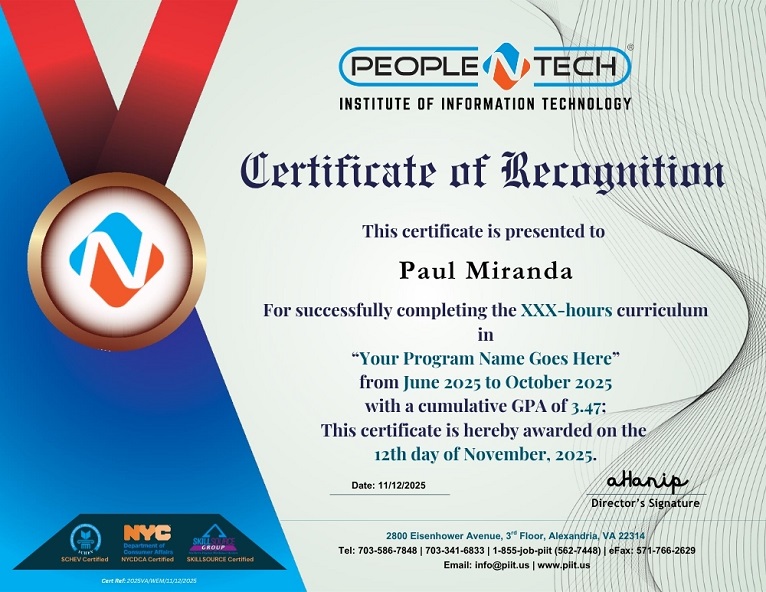

The application process is comprised of three basic steps. The shortlisted candidates will receive an admission offer, which they can accept by paying the admission cost.

Easily apply to any of our bootcamps by completing a simple online form and submitting required information.

An admission panel will shortlist students based on their application

Selected students can commence the program within short time

We've compiled answers to some of the most common questions ask.
This program focuses on how modern applications are built, deployed, and managed using DevOps practices and cloud platforms. You will also learn how AI-driven operations (AIOps) are used to automate monitoring, detect issues, and improve system performance.
Yes, beginners can join this program even without prior IT experience. The course is structured step-by-step, starting from fundamentals and gradually moving into advanced cloud and automation concepts.
You will learn cloud computing, CI/CD pipelines, containerization, infrastructure as code, and system monitoring. Along with that, you will also explore AI-powered tools used for automation and performance optimization.
You can target roles like DevOps Engineer, Cloud Engineer, and Site Reliability Engineer. These roles are essential in modern software teams and are highly valued across industries.
In the US market, DevOps engineers are earning around $140K–$150K on average in 2026. Demand continues to grow due to increased cloud adoption and the need for faster, more reliable software delivery.
AI is used for predictive monitoring, automated incident detection, and performance optimization. Professionals who understand both DevOps and AI tools have a strong advantage in the job market.
Yes, the program includes real-world labs, cloud deployments, and automation projects. You will gain experience that closely matches actual industry workflows.
Yes, as companies continue to rely on cloud and automation, DevOps remains one of the most stable and high-growth career paths in tech.